
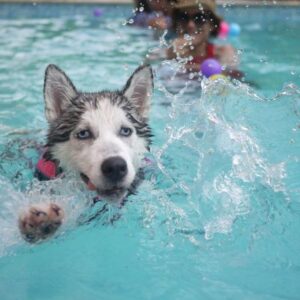
No, not all dogs can swim — and some breeds can be in serious danger around deep water. Most dogs can do a basic paddle when they find themselves in water, but that’s very different from being a confident, safe swimmer. A Labrador will take to a lake like it was born there. A Bulldog can drown in minutes.
Knowing where your dog falls on that spectrum isn’t just interesting — it could save their life. Here’s everything you need to know: which breeds are natural swimmers, which ones need extra protection near water, how to teach a dog to swim safely, and what Indian dog owners specifically need to watch out for.
Do all dogs have natural swimming ability?
Most dogs will instinctively start paddling when placed in water. It’s called the “dog paddle” for a reason. But paddling and swimming are not the same thing.
A dog that’s paddling is fighting to stay afloat. A dog that can swim is moving through water with control, breathing easily, and not exhausting themselves in 2 minutes.
Whether your dog crosses from one to the other depends on 3 things:
- Body structure — webbed paws, a strong build, and a proportionate head all help
- Breed history — dogs bred for water work are built and wired for it
- Experience — most dogs who lack instinct can still learn with patient training
Some breeds were literally engineered for water over centuries. Others — especially flat-faced (brachycephalic) breeds — are physically unable to swim safely, no matter how much they want to.
Which dog breeds are natural swimmers?
These breeds have been developed for water-based work — retrieving waterfowl, rescuing people, herding fish. Their bodies reflect it.
Labrador Retriever — Arguably the most water-loving breed in the world. Webbed paws, a waterproof double coat, and a natural retrieve instinct make Labradors exceptional swimmers. If you have a Lab and haven’t introduced them to water yet, you’re missing out on their favourite thing.
Golden Retriever — Similar to the Labrador in build and instinct. Goldens are strong, enthusiastic swimmers with excellent stamina.
Newfoundland — Built for water rescue. Their large frame, webbed paws, and thick water-resistant coat mean they can haul a person out of the sea without tiring. One of the strongest swimming breeds in the world.
Portuguese Water Dog — Historically used to herd fish and retrieve gear from the water. Agile and powerful, with a curly coat that repels water.
Standard Poodle — The haircut is designed for swimming, not fashion. The curly coat insulates joints in cold water while staying light. Poodles were originally waterfowl hunters and are exceptional in the water.
Chesapeake Bay Retriever — Bred to retrieve ducks from icy American waters. Dense, oily waterproof coat and a muscular build made for tough conditions.
Irish Water Spaniel — The clue is in the name. One of the oldest and most dedicated water breeds.
Curly-Coated Retriever — One of the oldest retriever breeds. Their tight curls are naturally waterproof.
American Water Spaniel — Compact and versatile, able to retrieve from both land and water.
Flat-Coated Retriever — Energetic and joyful in the water, bred for waterfowl retrieval.
Nova Scotia Duck Tolling Retriever — The smallest retriever breed. Excellent swimmer with a strong drive to retrieve.
Weimaraner — Athletic and built for hunting, they’re strong swimmers and enjoy the water as part of their exercise routine.
Bernese Mountain Dog — Primarily a mountain breed, but their powerful build and thick coat mean they handle water well when introduced to it.
Akita — Not commonly associated with swimming, but many Akitas are strong natural swimmers with a high drive to explore water.
English Setter — Slim and athletic, good in calm water as part of their hunting heritage.
Spanish Water Dog — A herding and working breed traditionally used around water. Agile and capable in aquatic environments.
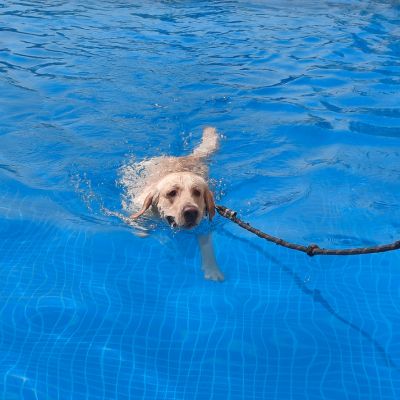
The AKC lists these as natural water dog breeds — each was developed for water-based work that demanded both physical and instinctive swimming ability.
Which dog breeds struggle with swimming, and why?
The main reason some dogs can’t swim comes down to physics. Their bodies work against them in water, and no amount of training fully fixes that.
- Brachycephalic breeds (flat-faced dogs) have the hardest time. Their short snouts mean they have to tilt their heads high to keep their nose and mouth out of the water — which pushes their hindquarters down and makes them sink. They’re also prone to breathing difficulties even on dry land, which gets dramatically worse in water.
Bulldog (English and French) — Their heavy heads, short legs, barrel chests, and flat faces are a dangerous combination in water. Both English and French Bulldogs can sink quickly. Never let them swim unsupervised, and always use a life jacket.
Pug — Same structural problem as Bulldogs. Dense body, short nose, limited stamina. Pugs tire within minutes in water and can panic easily.
Dachshund — Their long spine and short legs make swimming awkward and exhausting. They can manage in calm, shallow water with support, but open water is risky.
Boxer — Strong dogs, but that broad chest and short snout creates the same breathing issue as other brachycephalics. They tire faster than their strength suggests.
Shih Tzu — Small, flat-faced, and with limited stamina. Shih Tzus near water need constant supervision.
If your dog has a flat face, it’s worth reading VCA Hospitals’ full breakdown of brachycephalic airway syndrome — it explains exactly why exercise and heat make breathing so much harder for these breeds.
Can dogs learn to swim?
Yes — most dogs can learn to enjoy the water, even if it doesn’t come naturally. Here’s how Enzo learned, and what you can take from it.
“Last week, I took Enzo for his first swimming session. At first, he was unsure — he paused at the edge, looked around, and took a few careful steps in. With the trainer’s guidance and some encouragement, he slowly began to paddle. Once he found his rhythm, he started moving around the pool with ease. By the end of the session, he was confident and happy. Swimming is now something he genuinely looks forward to.”
Here is the video of Enzo’s first swimming session:
Enzo’s experience is pretty typical for a dog with natural swimming ability who just needed the right introduction. Here’s how to replicate it:
Step 1: Start shallow
Find water where your dog can stand. A calm, shallow lake edge, a paddling pool, or a dog-specific swimming facility. Never start in deep water.
Step 2: Let them choose
Don’t force or throw them in. Walk in with them, use a calm voice, and let curiosity bring them forward.
Step 3: Use treats for confidence
Small, high-value treats reward calm behaviour near and in the water. This is where natural dog treats that your dog genuinely loves make a difference — they need to be motivated enough to move past the uncertainty. Use small pieces, not whole cookies.
Step 4: Support their body
For dogs that are unsure, gently place one hand under their belly as they move through water. This reassures them without taking over. Reduce support gradually as they build confidence.
Step 5: Keep sessions short
10 to 15 minutes is enough for a first few sessions. End on a positive note while they’re still enjoying it.
Step 6: Use a life jacket for unsure swimmers
A well-fitting dog life jacket gives uncertain swimmers buoyancy and a handle so you can lift them out quickly if needed.
Swimming with dogs in India — what you need to know
Most dog swimming advice you find online is written for Western contexts — purpose-built dog pools, clean lakes, and mild summers. India is different, and it matters.
Indian summer heat makes swimming a smart exercise choice
When it’s 40 degrees outside and a long walk would overheat your dog, a short swim session is genuinely excellent exercise. Cooling your dog down after walks is important, but swimming replaces that problem entirely — it’s exercise and cooling in one. If you have access to a clean pool or dog swimming facility, Indian summers are actually the best time to introduce your dog to water.
Indian water bodies carry real risks
Rivers, lakes, and ponds in India can carry leptospirosis — a bacterial infection spread through contaminated water, often from rat urine. Dogs can contract it through their skin, mouth, or eyes while swimming. It’s serious: it affects the kidneys and liver, and it can be fatal if untreated. Stick to clean, well-maintained water — avoid stagnant ponds, flooded streets during monsoon, and murky river water. If your dog does swim in natural water, rinse them off immediately after and dry their coat thoroughly.
Monsoon water is not safe for swimming
Flooded streets and storm runoff carry sewage, chemicals, and pathogens. If your dog is splashing through puddles or drains during monsoon, keep it brief and rinse them off. Supervised swimming is one thing; a dog who rolls in a drain during the rains is a different situation.
What about indie dogs? Indie dogs — Indian street dogs — are generally medium-sized with proportionate builds, which means most of them are physically capable of swimming. Many have never encountered a body of water deep enough to swim in, so their first reaction will likely be hesitation or curiosity rather than natural confidence. Introduce them exactly the same way you would any other dog: gradually, positively, with support. Don’t assume a street dog’s resilience means they can handle deep water. Their swimming ability is completely untested until you test it carefully.
Dog swimming facilities in India
These are still limited but growing — major cities like Mumbai, Bengaluru, and Delhi have dog swimming pools and hydrotherapy centres. They’re well worth finding if your dog needs low-impact exercise, is recovering from an injury, or you simply want to introduce them to water in a safe, controlled environment.
Health benefits of swimming for dogs
Swimming is genuinely excellent exercise — arguably better than walking for certain dogs. Here’s why.
Low-impact on joints
Water supports up to 90% of a dog’s body weight, which means all the muscle work of exercise with almost none of the joint stress. For dogs with arthritis, hip dysplasia, or joint pain, swimming is often recommended by vets as the safest form of exercise.
Better calorie burn than walking
Swimming engages more muscle groups simultaneously than walking. A 20-minute swim provides roughly the equivalent workout of an hour-long walk.
Cardiovascular fitness
Regular swimming improves heart and lung health and builds endurance — useful for working and sporting breeds who need conditioning.
Mental stimulation
New environments, new sensations, and the concentration required in water engage a dog’s mind as well as their body. Dogs who swim regularly tend to be calmer and more settled afterwards.
Ideal for weight management
The calorie burn without joint strain makes swimming particularly good for overweight dogs who can’t sustain long walks.
For dogs recovering from surgery or managing chronic joint conditions, VCA’s guide to veterinary rehabilitation medicine explains how structured hydrotherapy fits into a treatment plan.
How to keep your dog safe while swimming
The most important safety rules, regardless of breed:
Always supervise
Even strong swimmers can get into trouble — cramps, fatigue, panic if something startles them. Never leave a swimming dog unattended, not even for a minute.
Use a life jacket for vulnerable breeds
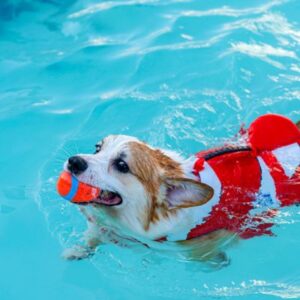
Flat-faced dogs, Dachshunds, small dogs, elderly dogs, and puppies should wear a properly fitting dog life jacket any time they’re near deep water. The jacket should have a handle on the back so you can lift them out quickly.
Watch for fatigue
Dogs don’t self-regulate as well as humans do — they’ll often keep going until they can’t. Warning signs include: heavy panting, slow or uncoordinated paddling, dropping their tail, or struggling to keep their head up. When you see any of these, get them out of the water.
Check for ear infections
This is something most swimming guides skip but it’s very common. Water trapped in the ear canal creates the perfect environment for bacterial or yeast infections — especially in dogs with floppy ears (Labradors, Golden Retrievers, Cocker Spaniels). After every swim, gently dry the outer ear with a soft cloth. If your dog is shaking their head persistently, scratching at their ears, or if you notice a smell, see your vet. You may also want to read about common questions about dogs.
Rinse after every swim
Chlorine from pools, salt from the sea, and bacteria from natural water all irritate skin and coat. A quick rinse with clean water after every swim prevents skin problems and gets rid of anything harmful they might lick off later.
Know the exit
Check that your dog can get out of the water themselves before they go in. Smooth-sided pools without steps are genuinely dangerous — a dog can exhaust themselves trying to get out. Use a ramp or always be positioned to lift them out.
Puppies and senior dogs need extra care
Puppies under 8 to 10 weeks shouldn’t swim at all — they can’t regulate their body temperature. Even older puppies should only swim in shallow, warm water with full support. Senior dogs can benefit hugely from swimming, but watch them closely for fatigue and keep sessions shorter than you would for a young adult dog.
Avoid unsafe water
Strong currents, big waves, unfamiliar rivers, and stagnant water are all hazards. In India, add monsoon runoff and potentially leptospirosis-carrying water bodies to that list.
Frequently asked questions
Can all dogs swim instinctively?
Most dogs will paddle instinctively if placed in water, but that’s not the same as being able to swim safely. Some breeds — especially flat-faced dogs — are physically unable to swim without risking drowning. Always assess your individual dog’s ability carefully before letting them into open water.
Which dogs can’t swim?
Bulldogs, Pugs, Dachshunds, Boxers, and Shih Tzus are among the breeds that struggle most with swimming. Their body structure (flat faces, heavy heads, short legs, or long spines) makes staying afloat exhausting or unsafe. These dogs should always wear a life jacket near deep water.
At what age can a puppy start swimming?
Most vets recommend waiting until a puppy is at least 8 to 10 weeks old before introducing them to water, and even then only in shallow, warm water with full supervision. Don’t let puppies swim in cold water — they can’t regulate their body temperature effectively. Proper swimming sessions work best from around 3 to 4 months, once the puppy is more physically coordinated.
Do dogs need a life jacket to swim?
Not every dog — a healthy adult Labrador or Golden Retriever with swimming experience doesn’t need one. But a life jacket is strongly recommended for: brachycephalic breeds, small dogs, puppies, senior dogs, dogs new to swimming, and any dog in open or deep water. If in doubt, use one.
Can indie dogs (Indian street dogs) swim?
Generally yes — indie dogs typically have proportionate, medium-sized builds that make them physically capable swimmers. However, most will have had no prior exposure to deep water, so you should introduce them gradually and carefully, exactly as you would any other dog. Don’t assume their outdoor toughness extends to water.
Is it safe for my dog to swim in a river or lake in India?
With caution. Natural water bodies in India can carry leptospirosis and other pathogens. Stick to clean, clear water — avoid stagnant ponds, monsoon runoff, and murky rivers. Rinse your dog off immediately after swimming in any natural water. If your dog seems unwell after swimming (fever, lethargy, loss of appetite), see your vet promptly.
How do I know if my dog is tired in the water?
Watch for: heavy or laboured breathing, slow or uncoordinated paddling, the tail dropping low, struggling to hold their head up, or a visible change in their expression from happy to anxious. Any of these signs mean it’s time to get them out and let them rest.
The takeaway
Not all dogs are natural swimmers — and knowing which category your dog falls into is the first step. The 16 breeds listed above were literally bred for water and will take to it naturally. Flat-faced breeds and those with difficult body proportions need extra protection every time they’re near deep water.
For the dogs in between — including most indie dogs — patient, positive introduction to water will get most of them swimming safely.
And wherever you swim in India: rinse your dog after every session, check their ears, and be mindful of the water source. Swimming is brilliant exercise for dogs, especially in our summers. Just do it safely. You may also want to read about dog paws and anatomy.
If your dog is recovering from a joint injury or you’re looking for low-impact exercise options, ask your vet about canine hydrotherapy — it’s increasingly available in Indian cities and the benefits are well-documented.